


Periodontitis
Periodontal Treatment

Gum Disease: A Condition to Manage, Not Cure
Gum disease starts as gingivitis (inflamed gums) and can progress to periodontitis, a serious infection that destroys the bone supporting your teeth.
The biggest danger is its lack of early symptoms. Many people don’t realize they have a problem until their teeth feel loose, by which point significant and irreversible bone loss has often occurred.
About Gum Disease
The Cause of Gum Disease
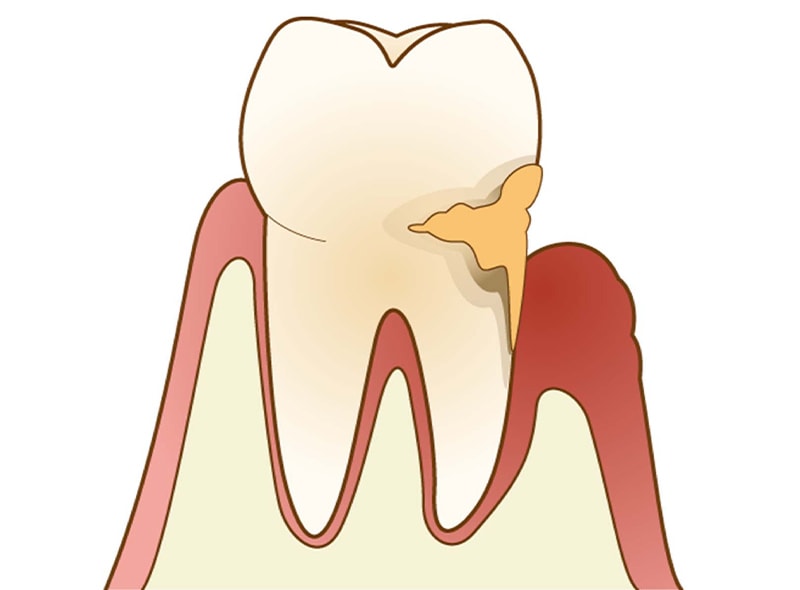
The root cause of gum disease is bacteria.
Your teeth are constantly coated in a sticky, invisible film called plaque, which is composed of bacteria. The toxins released by these bacteria are what cause gum disease to develop and progress.
If not removed, plaque hardens into a rough, porous deposit called tartar (or calculus). Tartar adheres firmly to the teeth, creating a breeding ground for even more bacteria to accumulate and continue releasing harmful toxins.
Periodontal Disease Self-Check
- Your gums are sometimes swollen or bleed.
- You are concerned about bad breath.
- One or more of your teeth feel loose.
- Your gums are receding, making your teeth look longer.
- You feel that you can’t chew properly.
- It has been a while since your last dental check-up.
Early detection and treatment are crucial for managing periodontal disease. Don’t assume you are fine just because you don’t have noticeable symptoms. Let’s work together to prevent and manage the disease with regular check-ups! If any of these symptoms sound familiar, please feel free to contact us for a consultation.
What Are the Risk Factors for Gum Disease?
Diabetes: This condition accelerates gum disease, but treating your gums can help improve blood sugar control.
Grinding and Clenching: Placing excessive stress on your teeth by grinding or clenching can speed up the progression of gum disease.
Genetics & Early Signs: A family history of tooth loss increases your risk. Frequent gum swelling at a young age is also a warning sign that needs attention.
A Special Warning for Smokers
Smoking impairs blood circulation in the gums, weakening your immune system. This makes you more susceptible to gum disease and causes it to progress much faster.
Additionally, smoking can darken your gums, masking the redness that is an early warning sign of inflammation and delaying its discovery.
It is vital for smokers to have regular check-ups and maintenance, even without cavities. For the health of your teeth and your entire body, we strongly recommend quitting.
Our Approach to Gum Disease Treatment
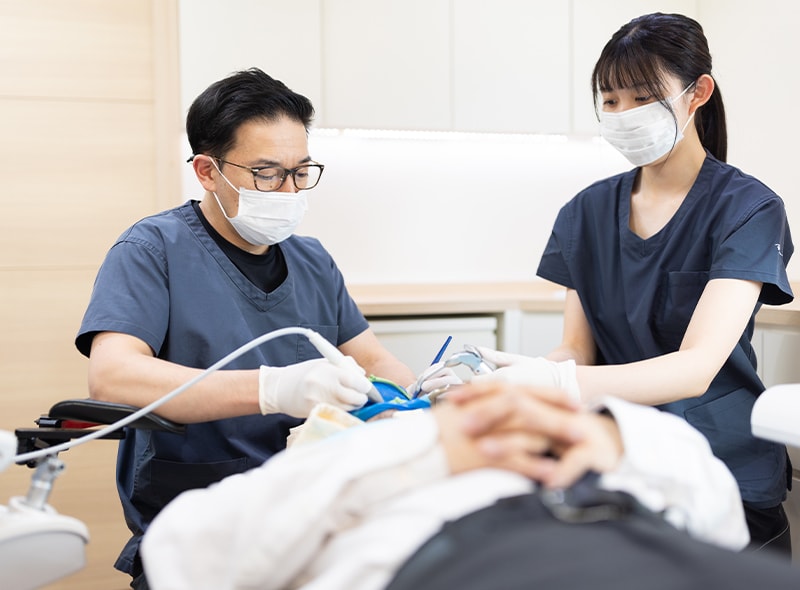
The old mindset of “visiting the dentist only when it hurts” is outdated.
We now know that gum disease is not caused by one specific type of “bad” bacteria. Instead, it develops when lifestyle factors disrupt the natural balance of the resident bacteria in your mouth.
This means that for gum disease, just like cavities, it is crucial to “prevent and control it with ongoing care,” rather than simply treating it after a problem appears.
This is why regular check-ups and professional maintenance at our clinic are essential.
Our Periodontal Treatment
Care from Your Dedicated Dental Hygienist
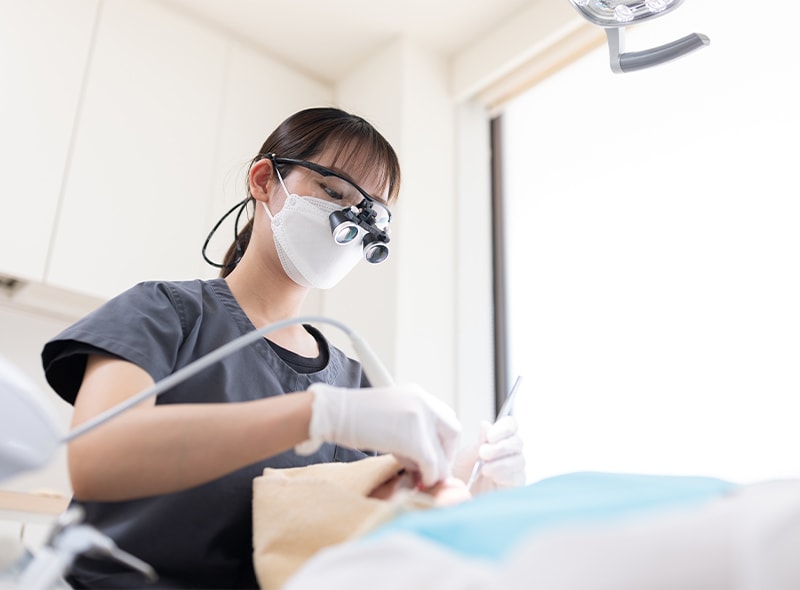
At our clinic, each patient is assigned a personal dental hygienist. This continuity of care ensures that the same professional sees you at every visit.
By doing so, your hygienist can closely monitor subtle changes in your oral health over time and provide more meticulous, personalized maintenance.Quality Maintenance Covered By Your Insurance
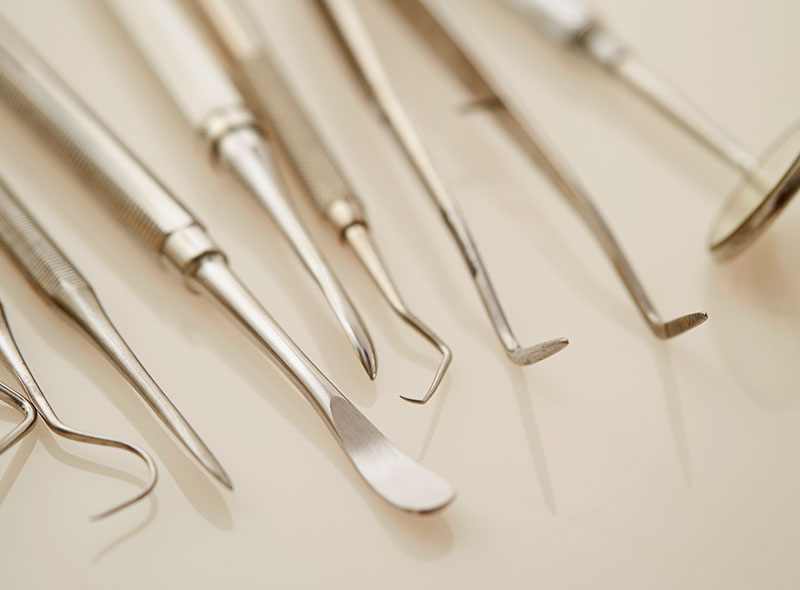
While many assume that ongoing dental maintenance is an expensive, out-of-pocket cost, our clinic provides thorough care that is fully covered by your Japanese Health Insurance.
We believe that managing cavities and gum disease is not a “special” treatment—it’s an essential part of routine health care for everyone.
A Clinic with Flexible Treatment Options
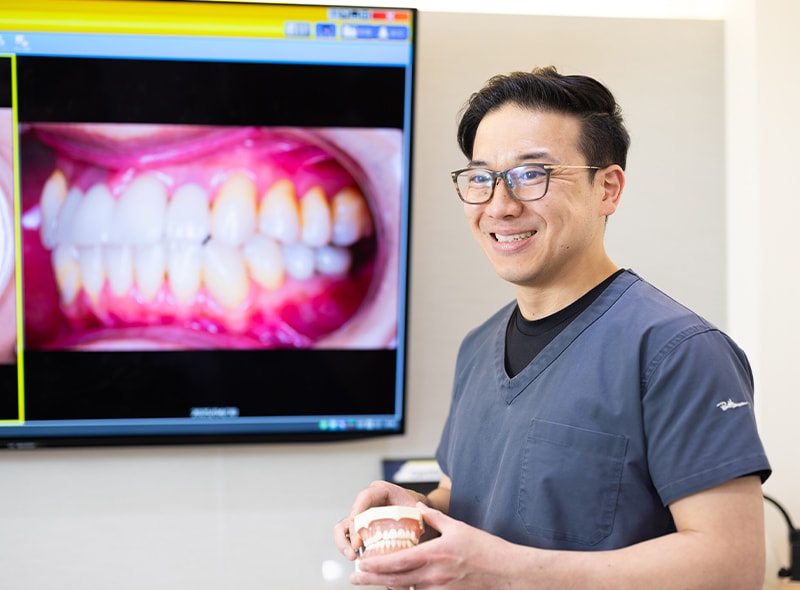
While our practice is centered on care covered by Japanese Health Insurance, we also offer a full range of private treatment options to meet your individual needs.
However, we want to assure you that all essential services—such as cavity management, routine maintenance, and treatment for pain—will always be provided under your insurance plan.
Please Feel Free to Inquire
Our clinic has been serving patients since 2015, and we are pleased to announce that we currently have openings for new patients in our regular dental maintenance program. Now is the perfect chance to start!
If you want to protect your long-term oral health and make professional dental care a consistent part of your routine, we warmly invite you to contact us.
Online Inquiry Form
Contact FormAbout Periodontal Treatment
Risk Assessment and Control Based on the New Classification System
Periodontal disease is an inflammatory condition affecting the tissues around your teeth. As it progresses, it destroys the supporting bone, which can ultimately lead to tooth loss.
The current global standard for classifying gum disease emphasizes the use of “Staging” and “Grading” to accurately assess its current severity and future risk.
Staging of Periodontal Disease
- Stage I (Mild): Gingivitis (gum inflammation) with minimal bone loss.
- Stage II (Moderate): Bone loss affecting less than the top third of the tooth root.
- Stage III (Severe): Bone loss affecting over one-third of the root, with noticeable tooth mobility.
- Stage IV (Advanced): Extensive bone loss, often leading to the loss of multiple teeth.
Grading of Periodontal Disease (Risk of Progression)
- Grade A (Low Risk): Slow rate of progression with few risk factors.
- Grade B (Moderate Risk): Moderate rate of progression with some risk factors.
- Grade C (High Risk): Rapid rate of progression, often with risk factors like smoking or diabetes.
Based on this comprehensive assessment, it is essential to create a personalized treatment plan to manage the disease effectively over the long term. Even in cases where the disease has progressed to an advanced stage, our approach is not limited to just control; active therapeutic options are often available to help restore your oral health.
Treatment for Early-Stage Periodontal Disease
Personalized Brushing Guidance
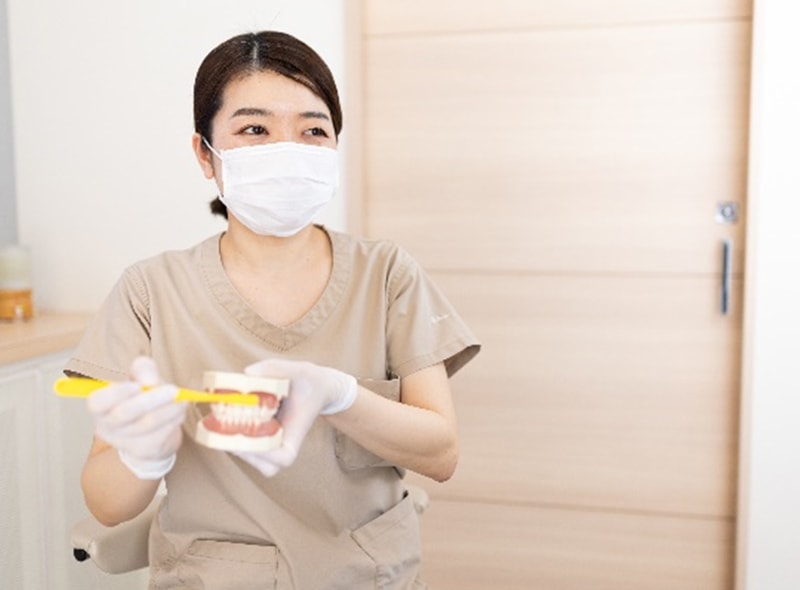
It is very difficult to check on your own whether you are effectively cleaning every tooth. We will first help you understand your unique dental alignment and personal brushing habits. Based on that knowledge, we will guide you in mastering a brushing technique that empowers you to effectively control plaque at home.
Scaling (Tartar Removal)
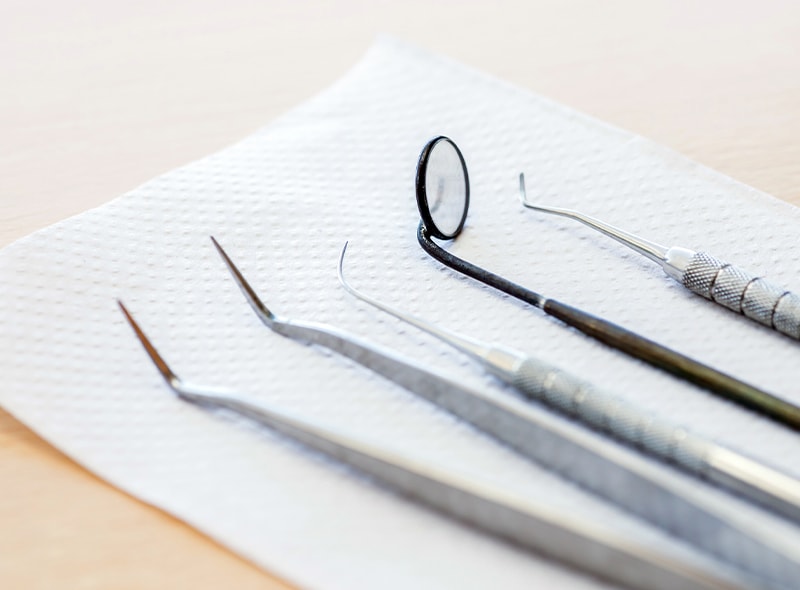
Scaling is a procedure that uses ultrasonic vibrations to break up and remove the hard tartar that is firmly attached to the surfaces of your teeth. We also carefully remove tartar from below the gum line, within the periodontal pockets (the grooves between the teeth and gums).
Root Planing (Deep Cleaning)
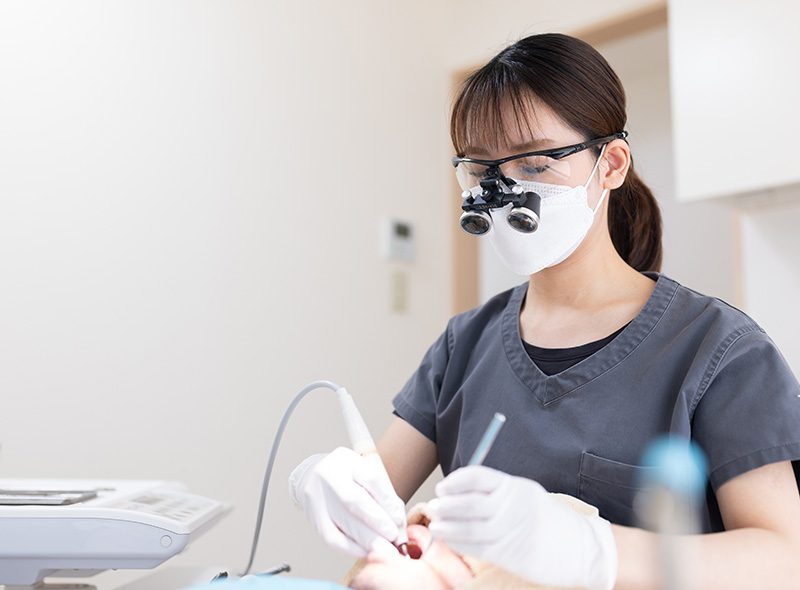
For patients with periodontal pockets approximately 3 to 5 millimeters deep, this procedure is performed after administering a local anesthetic to the gums.
The goal is to remove the deep-seated plaque and tartar from the tooth roots within these pockets—areas that cannot be reached by scaling alone.
Treatment for Moderate to Severe Periodontal Disease
Periodontal Flap Surgery
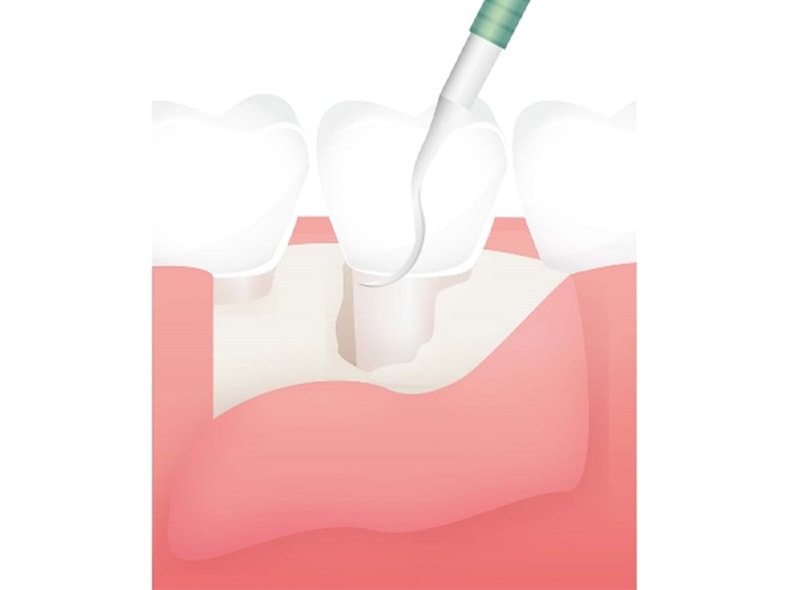
In areas where bone loss is significant and periodontal pockets are very deep, standard deep cleaning (scaling and root planing) is often not enough to remove all the tartar.
In these cases, flap surgery may be performed. This surgical procedure involves gently lifting the gum tissue away from the tooth. This provides direct access to thoroughly clean the tooth roots, remove deep-seated tartar, and clear away infected tissue before the gums are secured back in place to heal.
Periodontal Regenerative Therapy
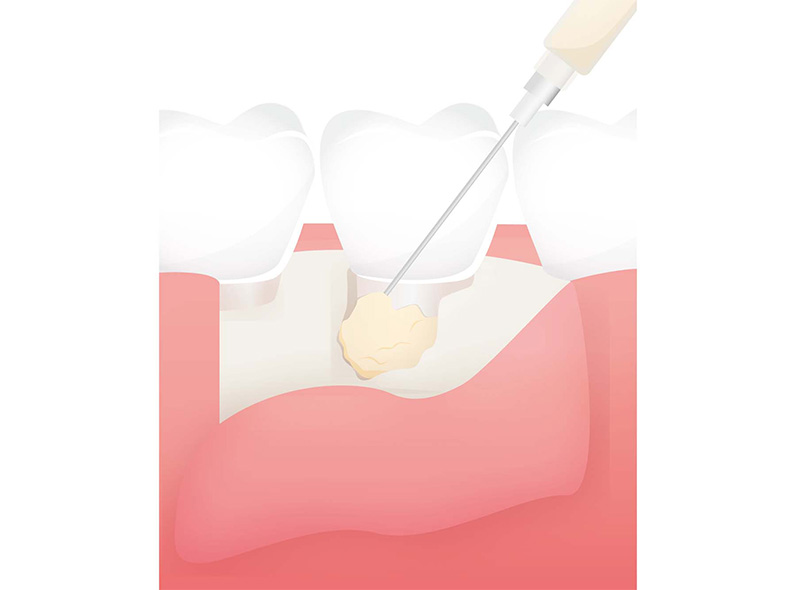
Periodontal regenerative therapy is an advanced treatment designed to regenerate the bone and other tissues that support the teeth, which have been lost due to periodontal disease.
This procedure aims to rebuild the periodontal ligament and jawbone destroyed by the infection, leading to a significant improvement in the overall health and condition of your gums.
Advanced Treatment for Severe Periodontal Disease
Microscope-Assisted Regenerative Therapy
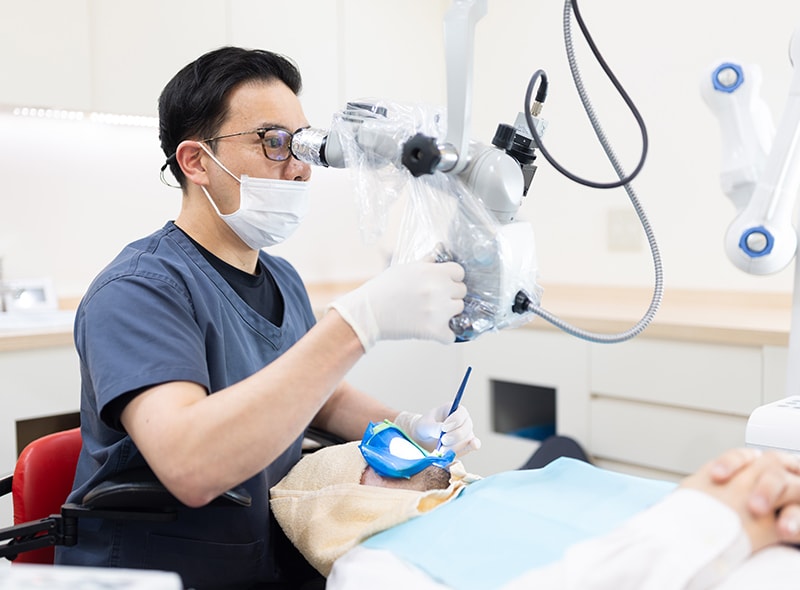
At our clinic, we perform advanced periodontal regenerative therapy using a state-of-the-art surgical microscope.
Utilizing a microscope allows for a procedure that is far more precise and less invasive than conventional methods. This approach maximizes the therapeutic outcome while minimizing the physical burden on our patients.
This therapy is performed in severe cases of periodontal disease to restore the vital tissues that support the teeth. By enabling an exceptionally thorough treatment, it is also highly effective at preventing future recurrence.
- Tonetti MSetal.(2017).”Treatment of Stage III and IV periodontitis:A systematic review.”J Clin Periodontol.
- Sculean A et al.(2019).”Advances in regenerative periodontal therapy.”Periodontology 2000.
- Cortellini P & Tonetti MS.(2020).”Micro-surgical approaches to periodontal regeneration.”J Clin Periodontol.
Regenerative Therapy for Vertical Bone Defects (Emdogain & Regroth)

For vertical bone defects (where bone loss occurs in a deep, narrow pattern around a specific tooth), we use two advanced regenerative materials: Emdogain and Regroth.
Emdogain utilizes a protein derived from porcine (pig) tooth enamel. It helps stimulate the regrowth of essential tissues, such as the periodontal ligament, which in turn promotes bone regeneration.
Regroth is a growth-factor medication that is applied directly to the area to help restore the periodontal tissues that have been lost to gum disease.
Since 2016, Regroth has been covered by Japanese Health Insurance, making this advanced therapy accessible to more patients.
Sample Treatment Process

Gum Incision
First, a local anesthetic is administered. After confirming the area is completely numb, a small incision is made in the gum tissue over the area with the deep periodontal pocket.

Plaque and Tartar Removal
The incised gum tissue is gently lifted back. Using specialized instruments, we then meticulously remove all plaque and tartar buildup from the surfaces of the tooth roots. Because the anesthetic is effective throughout the procedure, you will feel little to no discomfort.

Application of a Regenerative Agent
If necessary, in the areas where bone has been lost due to periodontal disease, a special agent is applied to aid in the recovery process. This is a crucial step designed to promote and accelerate healing and tissue regeneration.

Suturing & Post-Operative Care
To complete the procedure, the gum tissue is repositioned and secured with sutures. We will then monitor your recovery, and if the area is healing properly, the stitches will be removed at a later appointment.
Afterward, we will continue with re-evaluations and any additional care as needed. Our ultimate goal is to work with you to maintain a healthy periodontal environment for the long term.
Root Coverage Procedures to Strengthen Tooth Support (e.g., Connective Tissue Grafts – CTG)

Root coverage is a surgical procedure to treat gum recession. It involves using an advanced technique, such as a Connective Tissue Graft (CTG), to cover exposed tooth root surfaces with new, healthy gum tissue.
This therapy offers several key benefits: it strengthens the tissues supporting the tooth, promotes periodontal regeneration, and increases the volume and thickness of the gums where they have receded. It can also be a vital procedure to create a healthy foundation for future dental implant treatment.
Connective Tissue Grafts (CTG)
Gum recession can expose tooth roots, leading to sensitivity, decay, and an unstable bite. We can correct this with a procedure called a Connective Tissue Graft (CTG).
This involves transplanting a small piece of tissue from the roof of your mouth to the receded area. This procedure covers the exposed root, restoring a healthier and thicker gum line.
Free Gingival Grafts (FGG)
When your gums recede in a specific area, a gum graft can successfully restore the gum line.
This procedure involves transplanting a small piece of resilient tissue, typically from the roof of your mouth, to the area lacking sufficient gum tissue. This helps rebuild a stronger, healthier periodontal foundation.
Periodontal Disease Treatment FAQ
What is periodontal disease?
It is a disease where bacteria in plaque dissolve the bone that supports your teeth, eventually causing them to fall out.
It progresses from gingivitis (gum inflammation) to periodontitis, where the supporting bone is lost.
Known as a “silent disease,” it can become severe without any warning signs.
Are shiso noro and periodontal disease different?
They are the same disease.
The older name, shiso noro, was based on a single symptom: pus from the gums. The modern name, periodontal disease, is now used because it better describes a condition that affects all the supporting tissues of the teeth, including the jawbone.
Are gingivitis and periodontitis different?
Yes, they are different stages of gum disease.
Gingivitis is the early stage, where inflammation is limited only to the gums. The supporting bone is not yet affected.
Periodontitis is the more advanced stage. In this stage, the inflammation spreads beyond the gums and begins to destroy the jawbone that supports the teeth.
At what age does gum disease typically start?
While many people associate gum disease with adults, its earliest stage, gingivitis, can actually start in childhood.
Because the more advanced stages often progress without pain, it can go undetected until significant damage has occurred. Consistent daily brushing and regular dental check-ups are the best way to prevent it.
How can I prevent periodontal disease?
The absolute key is plaque control. Preventing the disease means removing the film of bacteria that collects on your teeth.
This requires a partnership: You perform daily brushing to remove plaque above the gum line, while we provide professional cleanings to remove the plaque hidden deep below it.
How is periodontal disease treated?
Once the jawbone has been lost to periodontal disease, it cannot be restored naturally. The most important goal, therefore, is to stop the condition from worsening.
The cause of the disease is plaque, so treatment focuses on reducing these bacteria. The first step is your own daily brushing to prevent the bacteria from increasing any further.
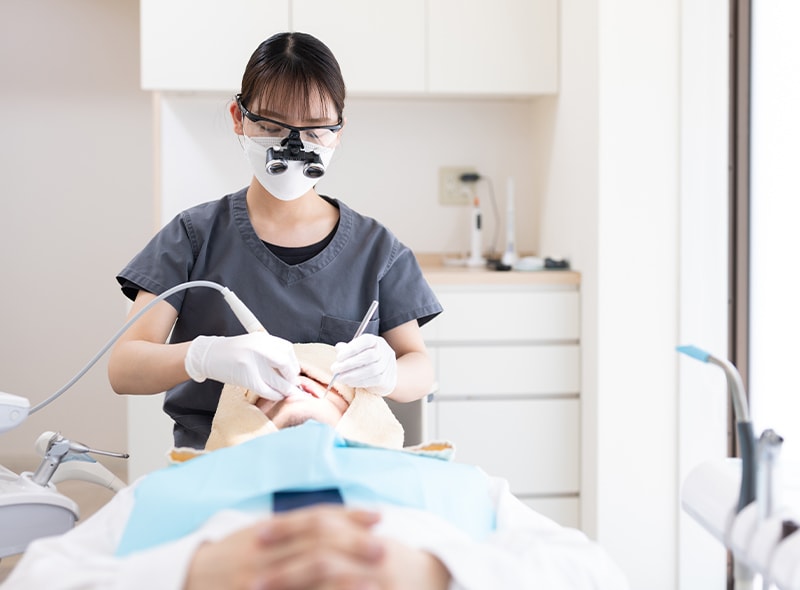
Professional Care for Periodontal Disease
Periodontal disease starts with gum inflammation and can lead to tooth loss if it becomes severe.
To protect your oral health, professional preventive care is essential for early detection and to control the disease-causing bacteria.